Eye Wellness
Disclaimer; This device is not commercially available. US and Foreign Patent Applications have been filed. Such a device is intended for general wellness purposes to encourage or maintain eye wellness and NOT for any medical purposes (such as detection, diagnosis, monitoring, management or treatment of any medical condition or disease). Please consult a physician/doctor for any medical advice required. See the reference list further below for additional information.

Under Development / Not for Sale / Tabletop Unit to be Developed first.
US and Foreign Patents Granted and Pending
Our eyes have evolved over hundreds of millions of years. Sunlight is essential to maintain the proper physiological balance for our eyes. Unfortunately, living in today’s global society places demands that cause each of us, especially young children, to spend far less time outdoors in the sun. While sunlight appears to be white light, sunlight is made up of a combination of multiple different color wavelengths of light. Certain of these wavelengths are essential to maintain the proper eye health, wellness of the eyes and the whole body by regulating the circadian rhythm. [Ref: 1-12]
The NeuroRays’ Eye Wellness System helps to maintain the proper physiological balance needed. [Ref: 13-25] Think of it as providing daily vitamins of light into your eyes. (Disclaimer: The NeuroRays Eye Wellness System is not intended to replace or prevent the need for vison corrective eyeglasses).
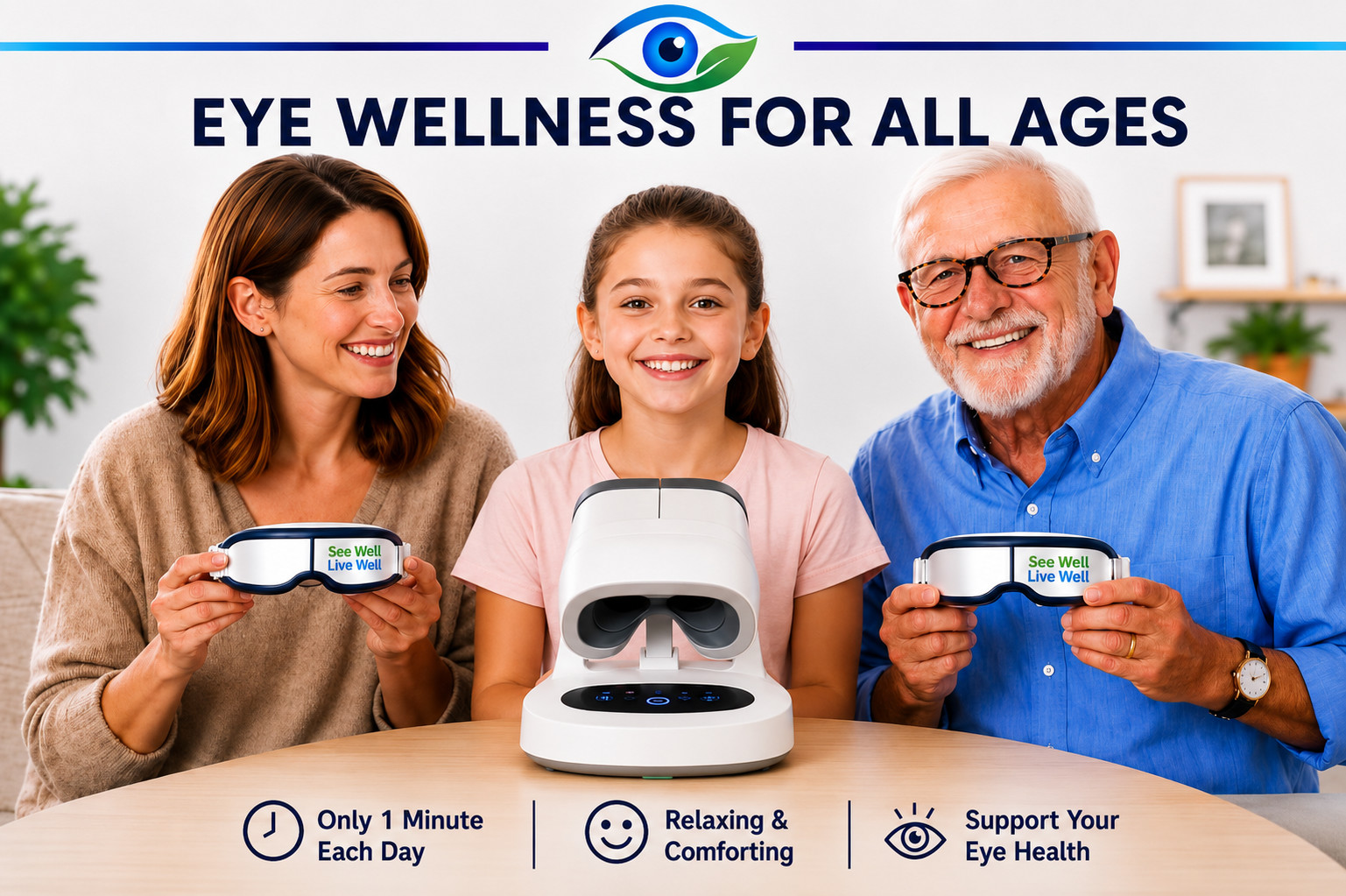
Under Development / Not for Sale / Tabletop Unit to be Developed first.
US and Foreign Patents Granted and Pending
NeuroRays Eye Wellness Product
- Daily Eye Wellness Routine
- Supports Healthy Eyes (Light Vitamins for Your Eyes™)
- Promotes Visual Comfort
- Helps Maintain Normal Eye Function [Ref: 5, 13, 16, 19, 21]
- Non-Invasive / Painless
- The Eye’s Semi-equivalent of a Dental Toothbrush
- Utilizes a Daily Proprietary Low-dose Regiment of PBM Light Wavelengths and Irradiance (By way of example; a fraction of sunlight exposure and 100 – 200 times less than a bright light box)
- Protects the Eye’s Central Retina during Eye Wellness Session
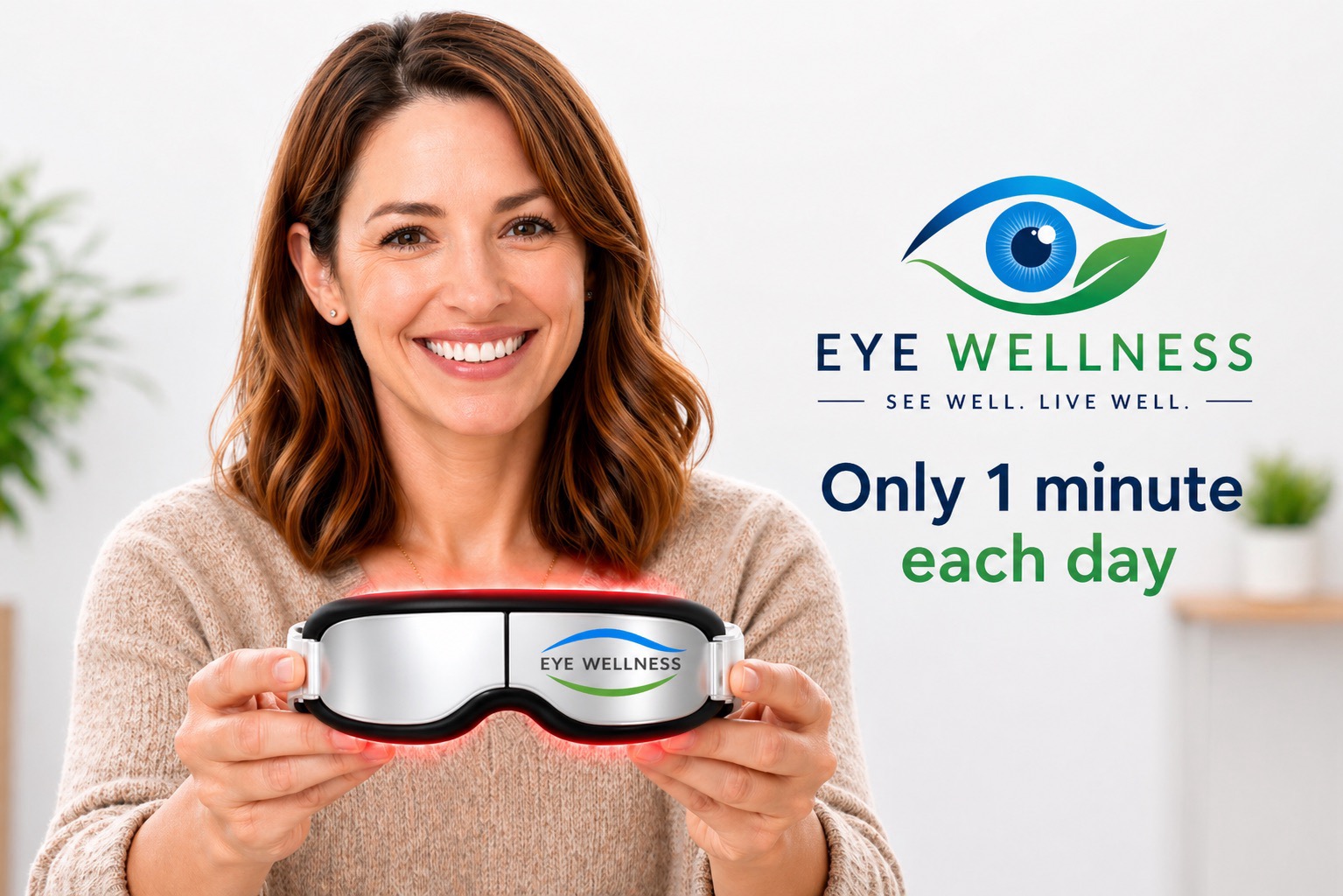
- Timed Protection Allows for Use of Only 1 Minute Per Day
Under Development / Not for Sale / Tabletop Unit to be Developed first.
US and Foreign Patents Granted and Pending

References
- Foster, R.G., Fundamentals of circadian entrainment by light, Lighting Res. Technol. 2021; 53: 377–393.
- Li, C-Y. et al., The Light–Eye–Brain Axis: Neurobiological Links Between Mood Disorders and Myopia – A Narrative Review, Ophthalmol Ther (2026) 15:901–924.
- Moore-Ede, M. et al., Lights should support circadian rhythms: evidence-based scientific consensus. Photonics 2023, 4:1272934.
- Foster, R. G. et al., Circadian Photoentrainment in Mice and Humans, Biology 2020, 9, 180.
- Vilotijevic, A. et al., Functional benefits of cognitively driven pupil-size changes, WIREs Cognitive Science, 2023, e1672.
- Ketema, P. et al., The role of retinal photoreceptors in the regulation of circadian rhythms, Rev Endocr Metab Disord. 2009; 10(4): 271–278
- Zelle, A.J. et al., The Circadian Response of Intrinsically Photosensitive Retinal Ganglion Cells, PLoS One, 2011, Vol 6, Issue 3, e17860.
- Markwell, E. et al., Intrinsically photosensitive melanopsin retinal ganglion cell contributions to the pupillary light reflex and circadian rhythm, Clin Exp Optom. 2010; 93(3):137-49.
- Fasciani, I. et al., A New Threat to Dopamine Neurons: The Downside of Artificial Light, Neuroscience 432 (2020) 216–228.
- Li, D. et al., Is Spending More Time Outdoors Able to Prevent and Control Myopia in Children and Adolescents? A Meta-Analysis, Ophthalmic Res. 2024; 67(1):393-404.
- Xiong, S. et al., Time spent in outdoor activities in relation to myopia prevention and control: a meta-analysis and systematic review, Acta Ophthalmol. 2017; 95(6):551-566.
- He, X. et al., Time Outdoors in Reducing Myopia A School-Based Cluster Randomized Trial with Objective Monitoring of Outdoor Time and Light Intensity, Ophthalmology, Vol 129, 11, 2022, 1245.
- Valter, K. et al., Photobiomodulation use in ophthalmology – an overview of translational research from bench to bedside. Ophthalmol. 2024, 4:1388602.
- Dompe, C. et al., Photobiomodulation – Underlying Mechanism and Clinical Applications, Clin. Med. 2020, 9, 1724.
- Cannas, C. et al., Current Applications and Future Perspectives of Photobiomodulation in Ocular Diseases: A Narrative Review. Sci. 2024, 14, 2623.
- Fantaguzzi, F. et al., Shedding Light on Photobiomodulation Therapy for Age-Related Macular Degeneration: A Narrative Review, Ophthalmol Ther (2023) 12:2903–2915.
- Quirk, B. et al., What Lies at the Heart of Photobiomodulation: Light, Cytochrome C Oxidase, and Nitric Oxide – Review of the Evidence, Photobiomodulation, Photomedicine, and Laser Surgery, 38, 9, 2020 Pp. 527–530
- Quint, W.H. et al., Exposure to cyan or red light inhibits the axial growth of zebrafish eyes, Experimental Eye Research 230 (2023) 109437.
- Maruani, J. et al., Bright Light as a Personalized Precision Treatment of Mood Disorders. Psychiatry 2019, 10:85.
- Rojas, C.R. et al, Low-level light therapy of the eye and brain, Eye and Brain 2011:3 49–67.
- Zhang, P., et al., Light Signaling and Myopia Development: A Review, Ophthalmol Ther (2022) 11:939–957
- Munteanu, T. et al., Light-dependent pathways for dopaminergic amacrine cell development and function, eLife 2018;7:e39866.
- Perez-Fernandez et al., Rod Photoreceptor Activation Alone Defines the Release of Dopamine in the Retina, Current Biology, 2019, 29, 763–774.
- Carpena-Torres, C. et al., Increased ocular dopamine levels in rabbits after blue light stimulation of the optic nerve head, Experimental Eye Research 234 (2023) 109604.
- Zhu, Q. et al., Near Infrared (NIR) Light Therapy of Eye Diseases: A Review, Int J Med Sci 2021; 18(1):109-119